
How Oncology Clinical Trials at CSU Helped Give Oban Another Chance
.png?sfvrsn=1489d55_1 "Untitled - March 31, 2026 at 08.42.33 (1)")
For pet owners facing a cancer diagnosis, guidance from a veterinary specialist can make all the difference. Through advanced diagnostics, personalized treatment plans, and access to clinical trials, veterinary oncologists are helping pets live longer, and better, lives.
At the CSU Flint Animal Cancer Center, that mission comes to life through specialists like Kristen Weishaar, a Board-Certified Veterinary Oncologist and oncology clinical trials manager, whose work helped guide Oban, a 13-year-old dog, through innovative cancer treatment options after he was diagnosed with oral malignant melanoma.
Oban’s journey began in August 2024 when his owner, Dr. Tiffany Healey, a primary care veterinarian in Wyoming, discovered a small growth on the outside of his mandible. After pathology confirmed the mass was an oral malignant melanoma- an aggressive cancer with a high likelihood of metastasis- Healey knew she needed expert guidance.
The standard recommendation for dogs with this diagnosis is often aggressive surgery involving removal of part of the jaw. Instead, Healey explored clinical trial opportunities and connected with the veterinary oncology specialists at CSU.
Working closely with Oban and his family, Dr. Weishaar and the team at CSU helped determine whether he would be a strong candidate for a clinical trial.
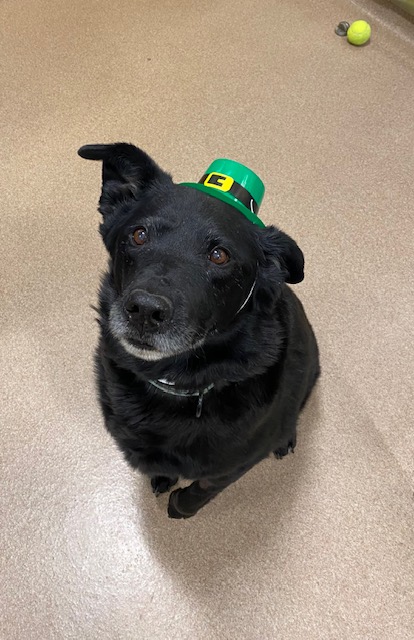
“Oban was a fine candidate for standard treatment. He was also a good candidate for a study,” said Douglas H. Thamm, Board-Certified Veterinary Oncologist and Professor and Stuart Presidential Chair in Oncology and Director of Clinical Research at the Flint Animal Cancer Center. “He was feeling and doing well outside of his tumor mass, and didn’t have any other age-related (or other) medical issues that could complicate his treatment.”
He also emphasized the importance of family commitment when participating in a study. “Oban’s owners had enough schedule flexibility to be able to make the multiple trips to CSU that were required to participate.”
For many pet owners, clinical trials can sound intimidating at first. But Dr. Thamm notes that misconceptions about clinical research are common.
One of the most common misconceptions about veterinary clinical trials is that enrolling a pet means 'experimenting' without safeguards. “Veterinary trials are regulated, protocol-driven studies that often include careful monitoring and may be available even when a pet is otherwise doing fairly well,” he clarifies.
Dr. Thamm said another common concern among pet owners is, “If my pet is in a trial, they will keep it in the hospital instead of at home with me.” In reality, he noted that “most pets in clinical trials have outpatient visits, rather than needing to spend time in the hospital.
Over the course of 15 months, Oban participated in two different clinical trials under the guidance of CSU’s oncology specialists and clinical trials team. When the first treatment stopped working, Dr. Weishaar and the team helped transition him into a second study, a double-blinded trial in which neither researchers nor owners knew whether he was receiving the investigational treatment or placebo.
Before beginning the second study, Oban’s tumor had continued to grow. During the trial, it disappeared.
Most of Oban’s visits involved exams, infusion treatments, monitoring, bloodwork, and imaging, all of which were coordinated by the veterinary specialists and clinical trials team. Despite frequent travel from Wyoming to Fort Collins, Oban tolerated treatment well and experienced no adverse side effects.
Today, Oban remains happy and healthy, continuing to enjoy the outdoor adventures he loves most, thanks in large part to the team of specialists at the CSU Flint Animal Cancer Center.
Learn more about Oban's Story >>
Articles by Specialty
- Cardiology (19)
- Large Animal Internal Medicine (23)
- Neurology (18)
- Oncology (22)
- Small Animal Internal Medicine (29)
Articles by Animal
- Cats (35)
- Dogs (52)
- Farm Animals (5)
- Horses (12)